輔大醫學院江漢聲教授。|Photo Credit:江漢聲
According to statistics released by the Taiwanese Association of Andrology and Sexual Medicine (TAASM), approximately one in five Taiwanese men over the age of 40 suffers from benign prostatic hyperplasia (BPH) and erectile dysfunction (ED). On average, about one in ten men experiences erectile dysfunction. Among men aged 40 to 49, the prevalence nearly doubles to around 20%, while among those aged 70 and above, more than half experience erectile difficulties. ED has therefore been described as the “fourth major lifestyle-related disease,” following hyperglycemia, hyperlipidemia, and hypertension.
Professor Han-Sun Chiang, one of Taiwan’s leading authorities in andrology, began promoting sexuality education in Taiwan as early as the 1980s. He founded the Taiwan Association for Sexuality Education (TASE), played a key role in the establishment of Fu Jen Catholic University Hospital, and served for many years as President of Fu Jen Catholic University. Professor Chiang has partnered with UNeMed Healthcare, a Taiwanese company specializing in amniotic fluid stem cells, to develop UA002, a novel amniotic fluid stem cell therapy. Research findings on the therapy have been presented at international society of andrology conferences, highlighting Taiwan’s growing capabilities in regenerative medicine. Business Insider Chinese Edition spoke with Professor Chiang about his decades of experience treating erectile dysfunction and the potential of amniotic fluid stem cells as a new therapeutic approach.
Sex Is Beneficial to Health — Don’t Give Up
Professor Chiang noted that male sexual function does decline with age, and vascular health is one of the primary contributing factors. The arteries supplying the penis are extremely small—even smaller than retinal blood vessels. As men age, conditions such as hypertension, hyperlipidemia, hyperglycemia, diabetes, and benign prostatic hyperplasia may contribute to vascular obstruction or endothelial cell deterioration, ultimately resulting in ED. It is estimated that for every additional decade of age, the risk of developing ED increases by approximately 5% to 10%.
Although sexual function inevitably declines to some extent with age, Professor Chiang believes that maintaining a healthy sex life remains important for both healthy individuals and people with conditions such as hypertension, hyperlipidemia, and hyperglycemia. A healthy sexual relationship may even contribute to longevity. As Taiwanese society has become increasingly open about sexuality, this shift has also been reflected in medical education. In recent years, urology has become one of the more popular specialties among physicians pursuing specialist training. Treatment options are now available for patients across a wide range of ages and physiological conditions, while emerging approaches such as regenerative medicine.
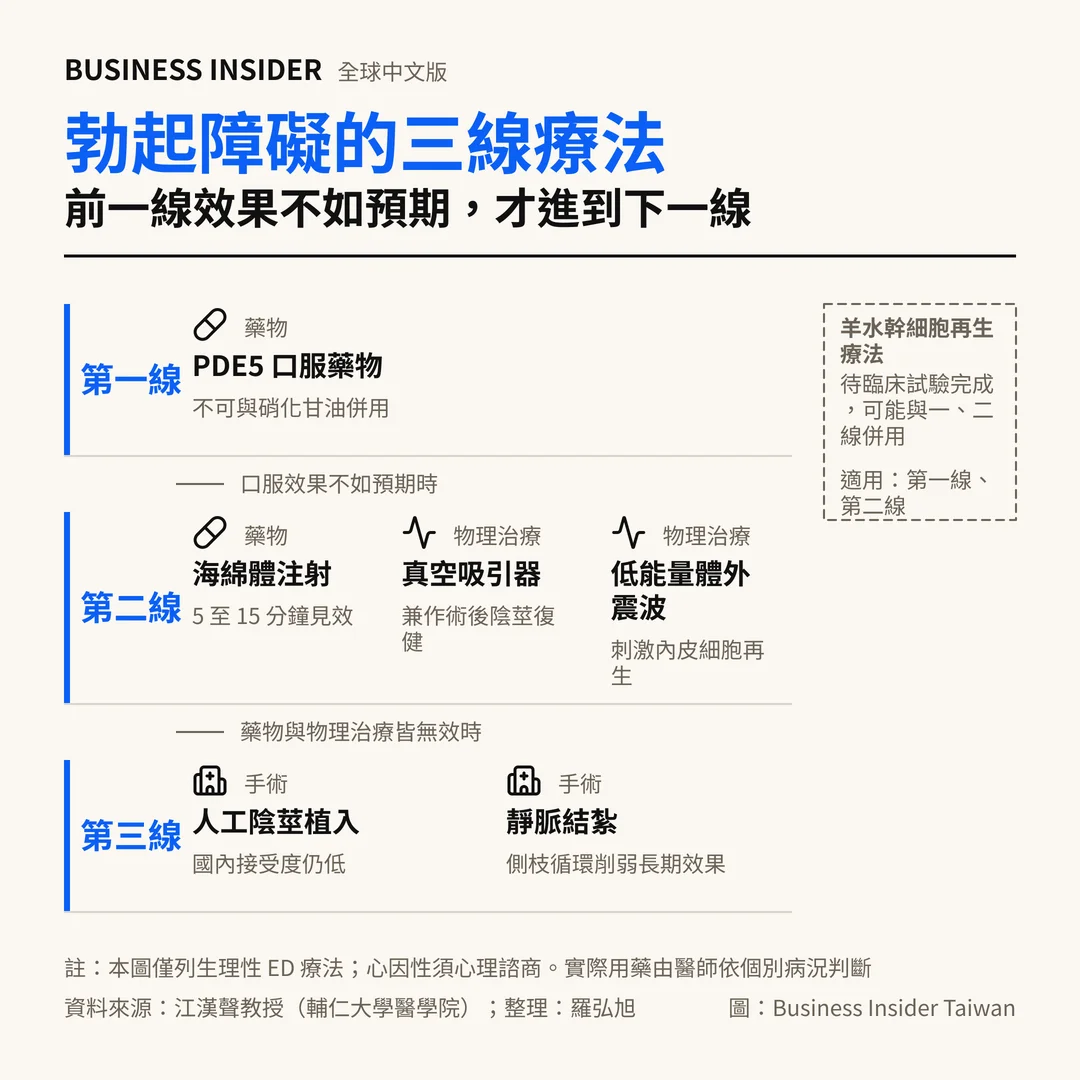
Currently, first-line treatment for ED consists primarily of oral medications such as Viagra. Second-line treatments include intracavernosal injections of prostaglandins, vacuum erection devices, and low-intensity shockwave therapy. For patients who fail to respond to either first- or second-line therapies—often referred to as “non-responders”—third-line treatment involving penile prosthesis implantation may help them regain sexual function and intimacy.
High Expectations for Regenerative Therapies
Professor Chiang pointed out that oral medications, injectable drugs, and physical therapies all have limitations. A more fundamental therapeutic strategy would be to preserve both the number and health of endothelial cells within the corpus cavernosum. For this reason, the field of andrology has been actively exploring the potential applications of regenerative medicine.
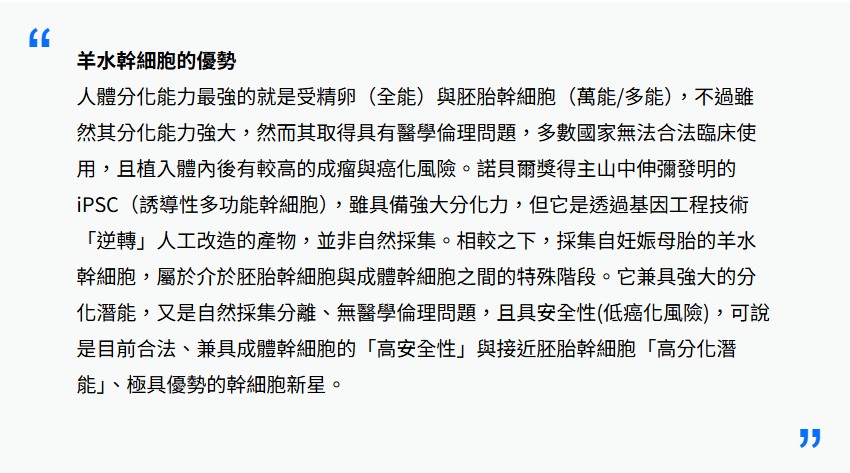
Based on research findings to date, amniotic fluid stem cells appear to be a highly promising option that could potentially complement existing ED treatments.
Previous regenerative medicine strategies for ED have primarily included platelet-rich plasma (PRP) and low-intensity shockwave therapy. In recent years, amniotic fluid stem cells have increasingly attracted the attention of research teams because of their regenerative potential and are being investigated as a promising emerging therapeutic option. The research collaboration originated in 2020, when Professor Yi-Na Wu, a member of the research team, attended a presentation by Dr. Hsiao-Min Huang, former principal investigator of National Taiwan Stem Cell Bank Program and current General Manager of U-Neuron Biomedical Inc., on the therapeutic potential of amniotic fluid stem cells. Following the presentation, Professor Wu approached U-Neuron about supplying research materials for animal studies involving one of the most difficult forms of ED to treat: erectile dysfunction caused by nerve injury. After the animal studies produced encouraging results, the Fu Jen Catholic University College of Medicine research team and U-Neuron decided to collaborate on the development of UA002, an amniotic fluid stem cell therapy for ED.
Promising Animal Study Results and Growing Interest in Collaboration
Dr. Hsiao-Min Huang was among Taiwan’s earliest researchers in the field of stem cell science and was involved in establishing Taiwan’s national stem cell database. He was also among the first researchers worldwide to isolate stem cells from human amniotic fluid and to file a patent relating to amniotic fluid stem cells. U-Neuron is also among the pioneering biotechnology companies globally to develop amniotic fluid stem cell therapies and advance them into Phase IIa clinical trials.
According to Professor Chiang, UA002 amniotic fluid stem cells theoretically possess greater differentiation potential than conventional adult stem cells. One distinguishing characteristic is their capacity for ectodermal differentiation, which is generally not observed in conventional mesenchymal stem cells. This characteristic may make them particularly relevant to diseases involving nerve damage. Animal disease models have produced encouraging results. In rats with erectile dysfunction caused by simulated cavernous nerve injury, intracavernosal injection of amniotic fluid stem cells resulted in a statistically significant increase in intracavernosal pressure (ICP), indicating improved penile rigidity. These findings suggest that amniotic fluid stem cells may contribute to the repair and regeneration of nerves, blood vessels, and smooth muscle cells, thereby potentially restoring erectile function.
Encouraged by these findings, the research team expanded its collaboration with U-Neuron and launched a clinical trial investigating amniotic fluid stem cell therapy for ED, with Professor Chiang serving as the principal investigator.
The team has subsequently presented and published research findings through internationally recognized academic journals and at the American Urological Association Annual Meeting (AUA). The research has also attracted interest from international andrology experts, some of whom have expressed interest in collaborating on future clinical trials.
Regenerative Medicine Could Become a Combination Treatment Option for ED
Professor Chiang explained that the clinical trial conducted in collaboration with U-Neuron focuses on ED caused by diabetes and radical prostatectomy (RP) for prostate cancer. The study specifically enrolls patients who have failed to respond to first-line oral medications and evaluates both the safety of the treatment and its potential to restore erectile function. According to preliminary clinical data, therapeutic outcomes have so far been consistent with the research team’s expectations. Patients who have been followed for up to one year have also demonstrated a favorable safety profile, raising expectations among the research team regarding the therapy’s future potential.
Every existing ED treatment has its own benefits as well as limitations. UNeMed Healthcare’s UA002 amniotic fluid stem cell therapy could potentially be used in combination with established treatments to produce complementary or synergistic effects. For example, older ED patients or those with declining function of the corpus cavernosum can currently use oral medications to temporarily restore erectile function. Amniotic fluid stem cell therapy, meanwhile, is being investigated for its potential to promote tissue repair and help maintain sexual function over a longer period. Researchers believe that combining the two approaches could potentially result in substantially improved overall therapeutic outcomes. One limitation, however, is that amniotic fluid stem cells are biological products and must be injected directly into the affected area—the corpus cavernosum of the penis. For some patients, the injection itself may present a psychological barrier.
In response to this concern, U-Neuron Chief Operating Officer Hsin-Yi Chuang, who oversees the clinical trial, explained that the needle used for UA002 injections is comparable in size to those used in insulin injection pens, which may help reduce patients’ concerns. Furthermore, the treatment would not necessarily require injections every time sexual activity occurs or even on a weekly basis. A single injection may potentially provide benefits lasting several months to as long as one year, making the treatment considerably more convenient.
Among the Global Leaders in Amniotic Fluid Stem Cell Biopharmaceutical Development
U-Neuron was founded by Frank Chien, former Chairman of LED manufacturer Ennostar Corporation, marking his transition from the electronics industry into biotechnology entrepreneurship. The company’s core technologies center on research and development platforms for amniotic fluid stem cells and exosomes, through which it has developed multiple product pipelines spanning medical treatments, aesthetic and wellness applications, and health-related food products. General Manager Dr. Hsiao-Min Huang was among the first researchers to successfully isolate and culture fetal amniotic fluid stem cells from amniotic fluid samples obtained during prenatal amniocentesis and subsequently secure patent protection for the technology.
Regarding the clinical development of UA002, Chief Operating Officer Hsin-Yi Chuang stated that clinical trials conducted in collaboration with Fu Jen Catholic University Hospital, Taipei Medical University Hospital, and Taichung Veterans General Hospital have now progressed to Phase IIa.
The clinical trial report from the first stage is currently being compiled and, once completed, the results are also expected to be submitted for publication in an international academic journal.
To address the needs of a broader patient population, U-Neuron plans to continue developing UA002 beyond indications involving diabetes-related ED and erectile dysfunction following radical prostatectomy for prostate cancer. The company also intends to investigate UA002 in combination with other therapeutic approaches through additional clinical trials, with the goal of establishing UA002 as a new treatment option in the field of andrology.
Article Source: https://www.businessinsider.tw/article/5089
TechNews https://technews.tw/?p=1611050&preview=true Economic Daily News https:...
Read More誠摯邀請參與盛會 2026 台灣細胞醫療協會年會 / 2026 TACT Annual Meeting 「科技智醫AI啟動再生」 日期/Date:115年...
Read More台灣醫界聯盟基金會執行長林世嘉。/Photo Credit:林世嘉 研議了多年的《再生醫療法》與《再生醫療製劑條例》(簡稱為「再生醫療雙法」)於今年起正式落地...
Read More